

Ship it or sell it
#There's no single right answer: our advice depends on the destination, your budget and the type and value of your goods. Weigh what each piece means to you, what it would cost to replace in France and how much space it takes. Some US households moving to France say they bring only sentimental and hard-to-replace things and sell or give away their furniture and appliances.
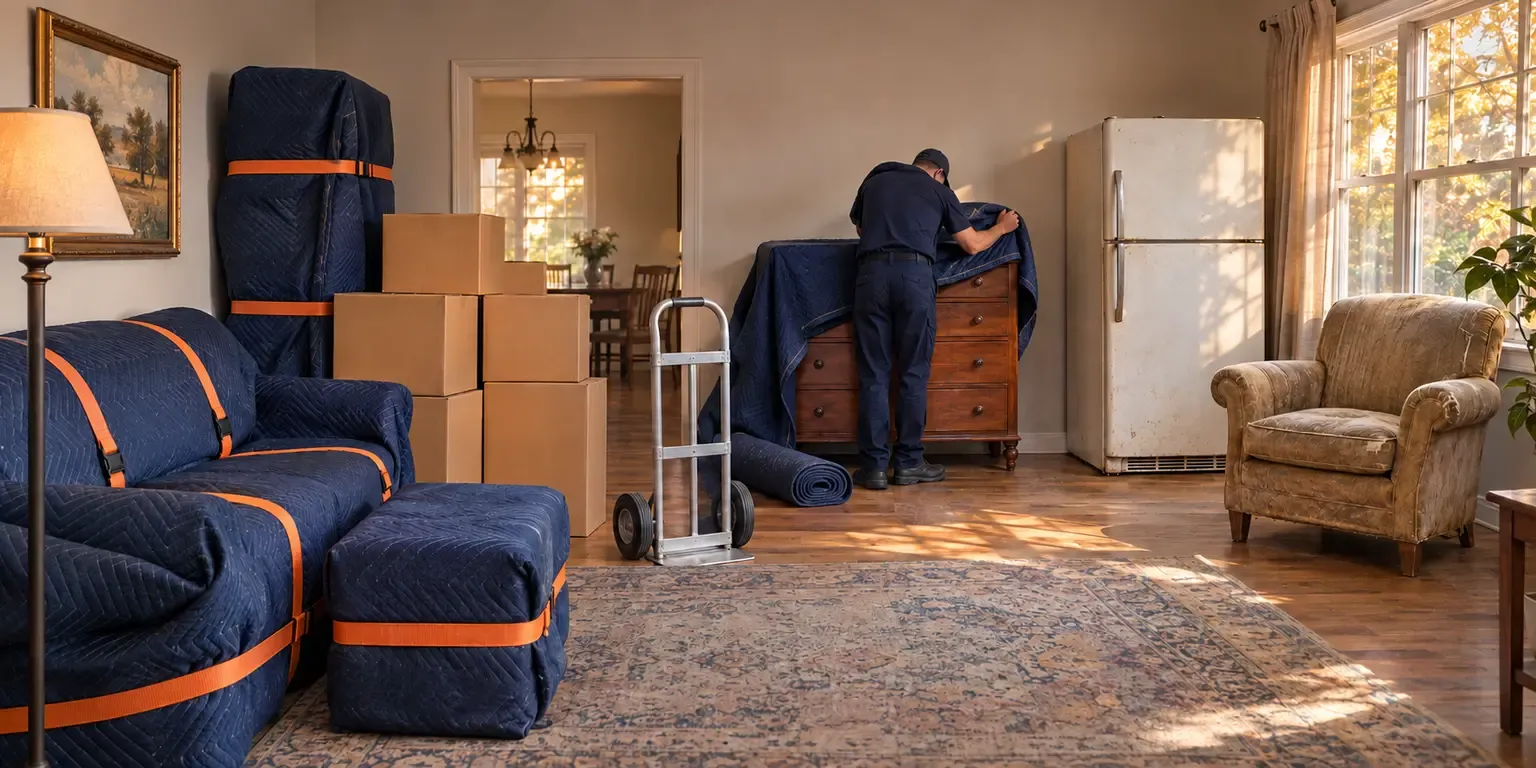
Worth bringing: personal goods you have used privately for at least six months before the move meet one of French customs' conditions for bringing them in free of duties and taxes (the import charges France sets). The other conditions and the papers are in the customs relief section.
Often better sold or left behind: goods French customs excludes from the relief, since duties and taxes apply to them (see what the relief doesn't cover).
You don't need a full container
A few boxes, heirlooms or some furniture can go to France without a whole move. In a shared container (consolidated cargo), your goods travel in a container with other shipments, so you pay for the space you use.
| Option | Typical size | How your goods travel |
|---|---|---|
| Air freight | From a single box | By air |
| Shared container by sea | From about 100 cubic feet (typical, not a minimum) | In a container with other shipments |
| Full container | Your whole household | In a container with only your goods |
Not sure yet? You can store your goods while you decide, at origin, in France or both. Storage is charged separately.
Tell us roughly what you want to bring when you Request a Quote.
What sets the price of your move
#The volume of your goods sets your quote, and your proposal lists the charges it leaves out, so you can check both before you book.
- Volume in cubic feet: The space your goods take up is what you pay to ship.
- If the measured volume differs from your quote: We tell you. In a shared container, we send you a revised invoice before your shipment goes on, so you can take items out. In a full container, we tell you during loading.
- Carrier surcharges after booking: Carriers can add surcharges for fuel, war risk or congestion after you book, and we tell you as early as we can.
- What the quote leaves out: Door to door means we collect at your home and deliver to your new home under normal access. Destination terminal handling, port charges, customs inspections, duties and taxes, storage, difficult access and a shuttle (a smaller truck where a large one can't reach the home) are listed in your proposal's exclusions and billed on the final invoice if they apply. Where a shuttle or difficult access is common, we check with our destination agent before you book and tell you the likely costs. Unforeseen storage or charges are generally yours to pay, and we tell you about them as early as possible.
- Why quotes for the same move differ: Quotes can be built on different volumes and include different things. Compare quotes on the volume they use, shared or full container, and what they leave out at the French end.
To see these charges for your own move, Request a Quote.
When your goods enter France without duty or import VAT
#Your household goods enter France without duty or import VAT when you transfer your normal residence to France from outside the EU and meet French customs' conditions. Without this relief, duty and import VAT are due, according to French customs. Your normal residence is where you usually live for at least 185 days in a calendar year because of your personal and work ties, weighed with other facts case by case, such as where your family lives, according to French customs' bulletin.
Conditions French customs sets:
- Time abroad: you have lived outside the EU for at least 12 months.
- Use: you have used the goods privately for at least 6 months before the move.
- Taxes: the goods have borne the customs duties or taxes of their country of origin or of the country you are bringing them from.
- Timing: you bring the goods in within 12 months of the move, in one shipment or several.
- Keeping them: you do not sell, hire out, lend, pledge or otherwise part with the goods for 12 months after entry.
Sources: French customs and Service-Public, checked November 2026. Rules change, and this is not legal advice.
The papers French customs asks for
French customs asks for these papers for the relief:
- Inventory: a detailed list of your goods, valued, dated and signed, in 2 copies.
- Form cerfa 10070: the declaration of duty-free entry, completed and signed.
- Proof that your main residence was outside the EU.
- Proof that you're settling in France: any document showing the change of residence.
If a car comes, Service-Public F492 adds the vehicle's registration certificate.
French customs describes cerfa 10070 as the form for declaring personal property brought into France duty-free from outside the EU. Service-Public tells you to complete and sign it and hand it to customs officers on entry. It also says you can ask the French consulate for a change-of-residence certificate before you leave; that certificate is optional. In return, French customs stamps a copy of your inventory. Before your shipment leaves, our destination agents review the customs documents it needs, and they check them again after departure. If you ship in more than one shipment, check that the inventory you give customs at the first entry lists everything you're claiming the relief for: French customs requires this.
What the relief doesn't cover
#Under French customs' rules, some of your goods fall outside the relief even when the rest of your household enters free, and Service-Public F492 says others need prior authorization before they come into France.
Not covered, according to French customs:
- Alcohol, tobacco and tobacco products
- Utility and mixed-use vehicles
- Transportable dwellings, such as mobile homes and caravans
- Professional equipment, other than portable instruments of your trade (Service-Public F492 names a stethoscope or musical instruments as allowed)
- Commercial stock: raw materials and finished or semi-finished products
Needs prior authorization, according to Service-Public F492:
- Works of art and cultural goods
- Weapons and ammunition
- Animals and plants
- Medicines
Pets: arriving from outside the EU, you must declare and present your pets to customs officers for a document and identity check, according to French customs.
Second home: goods for furnishing a second home in France no longer get the relief, so customs duty, VAT and any other tax that applies are due on the whole shipment, according to French customs.
No home or visa yet: when to ship
#-
The rule: French customs' and Service-Public's relief pages, as checked in November 2026, don't name a visa or residence permit among the papers for the relief. In French customs' list, a residence or immigrant card appears only as one example of proof of your move. Some households report a French clearing firm telling them customs won't release the goods without a long-term lease or a utility bill. Service-Public's page for form cerfa 10070 asks for one proof that you live in France, and names any one of these: an electricity or gas bill, a lease, a rent receipt, or a property-tax or housing-tax notice.
-
Before you settle: Your goods can come into France free of duties and taxes before you have settled if you undertake to establish your normal residence there within six months, backed by a guarantee: a deposit securing those duties and taxes, according to French customs' bulletin on import reliefs. The bulletin publishes no amount for the deposit, and we check with our agent whether this fits your shipment. The bulletin also covers goods brought in when work obligations make you leave the non-EU country you live in without settling in France at the same time, if you intend to settle there later. It also lets you qualify for the relief if you have not actually lived 12 months in a row outside the EU, provided you can prove, with documents the office accepts, that this was your intention.
-
Our advice: Ruby International generally recommends shipping once you have your visa or residence permit. That is our advice, not a customs rule.
-
Your practical options: Ruby International can arrange storage at origin, in France or both, charged separately. A shipping line's free days at the port are not warehouse storage, and they vary by line and port. When we quote, we give you an estimated transit window for your route; it's an estimate, not a guaranteed date, because it depends on the sailing, routing, customs and the destination.
Landing elsewhere in the EU? Ask us how your shipment reaches France before you book.
Who clears and delivers your goods in France
#With Ruby International, you have one contact from pickup to delivery, and our destination agent in France clears your shipment through customs and delivers it to your new home. Customs clearance is France's import check on your goods. Service-Public's page F492 says that for a container move, customs officers make the declaration electronically. Destination terminal handling and port charges are listed in your quote's exclusions and billed on the final invoice if they apply.
US households moving to France have described parts of the move handed off to local firms, and costs added after pickup. Before you book any mover, us included, ask these six questions and get the answers in writing:
- Customs clearance: who clears your shipment in France?
- Delivery: who delivers it to your new home?
- Payment at the French end: who pays the French firm, and when?
- Price basis: is the quote based on the volume of your goods?
- Exclusions: what does the quote list as excluded?
- Insurance: what cover is offered, in writing?
Moving from another EU country or the UK
#Moving to France from another EU country
Your household goods move to France with no particular customs formality when you come from another EU country, according to French customs. Through our network of moving agents, we can arrange smaller shared loads by road between European countries.
Moving to France from the UK
We also arrange moves from the UK. French customs applies the transfer-of-residence relief to moves from outside the EU. The UK is outside the EU, so the same relief conditions and papers generally apply to a move from the UK as to one from the US.
Bringing your car or motorbike
#Your car or motorbike can enter France free of duties and taxes when you transfer your residence and all five of these conditions are met, according to French customs:
- Residence: you have lived outside the EU for more than a year and are settling permanently in metropolitan France.
- Inventory: the vehicle is listed on your inventory of goods, drawn up in two copies.
- Type: it is not a utility vehicle.
- Use: the vehicle has been in your possession and you have used it for more than 6 months.
- Origin taxes: the taxes normally due in the country the vehicle comes from or its country of origin have been paid.
French customs then issues clearance certificate 846 A, which you present to register the vehicle. Service-Public says registration is compulsory whatever your nationality and must be done within 1 month of settling. The papers it lists generally include:
- Form: cerfa 13750
- Address: proof of address less than 6 months old
- Customs: certificate 846 A, unless customs marked your application exempt
- Roadworthiness: proof of a roadworthiness test if the vehicle is over 4 years old and not exempt
- Conformity: a European certificate of conformity (COC) from the manufacturer, or a single-vehicle approval (RTI) from the DREAL, the regional authority
Shipping your car or motorbike to France
We ship cars and motorcycles in your household container, in their own container or by roll-on/roll-off, depending on the route and France's import rules. For a car on its own, a dedicated container is often the practical choice. Electric and hybrid vehicles need extra paperwork, permits and handling, so expect extra charges and a longer booking. Our destination agents help with the vehicle's import papers and customs.
Selling your car or motorbike instead
Whether shipping the vehicle or selling it makes more sense depends on your budget and the vehicle's type and value.
Sources: French customs and Service-Public, checked November 2026.
Tell us which vehicle you want to bring when you Request a Quote.
Damage, insurance and claims
#If something arrives damaged, you want to know what happens next before it happens. Here are the terms.
- Insurance. All-Risk transit insurance is optional, at 3.5% of the value you declare (your declared value: the value the insurance is calculated on), with a USD 500 deductible (the first USD 500 of a claim). You may arrange your own insurance instead.
- If you pack some boxes yourself. If we pack your home and you pack some boxes yourself, leave them open so our crew can check them before sealing; they can then be considered for All-Risk cover, subject to the insurer's terms. List and photograph what's inside each one. If you pack and load everything yourself, All-Risk isn't available; Total Loss cover is, and it pays only if the whole shipment is lost.
- Set it up so a claim can work. Keep a valued inventory with photos. Let our crew pack fragile items. Keep small valuables and documents with you rather than in the shipment.
- If something arrives damaged. Note visible damage on the delivery papers before you sign. Report any damage within 30 days of delivery to start a claim. We help you through the claim and answer your questions. The insurance company assesses the claim, decides what is covered and settles it, and you deal with it directly. We can't promise how long a claim takes.
List any boxes you plan to pack yourself in your move details when you Request a Quote.
Sources and review date
#Everything this page says about the rules comes from these official pages. Last checked: .
- Vous souhaitez connaître les franchises applicables lors du transfert de votre résidence principale en FranceFrench customs (DGDDI)The relief for a transfer of main residence: the conditions, the papers customs asks for, what it gives back, the goods excluded, a second home, and moves from another EU country. The page carries no date of its own.Accessed .
- Les franchises douanières et fiscales de droit commun à l’importation (customs bulletin)French customs (DGDDI)Normal residence (at least 185 days a year, weighed case by case), goods brought in before settling on an undertaking with a deposit, and the intention to live outside the EU. Version 1, in force from 1 April 2022: its definitions and section 3.2, with article 50 septies of annex IV to the French tax code (CGI).Accessed .
- S’installer en France après avoir vécu dans un pays hors Union européenne : quels droits de douane ? (F492)Service-Public.frThe same conditions and papers, cerfa 10070 presented completed and signed, the optional change-of-residence certificate from the consulate, goods needing prior authorisation, and the declaration for a container move. Checked 19 November 2025.Accessed .
- Déclaration d’entrée en France en franchise de biens personnels en provenance de pays tiers à l’Union Européenne (cerfa 10070*03, R42719)Service-Public.frThe form, handed to customs officers on entry with a proof of residence in France (a bill, a lease, a rent receipt or a tax notice) and the full inventory. Checked 28 June 2022.Accessed .
- Achat d’un véhicule à l’étranger ou dans un DOM-COMFrench customs (DGDDI)A vehicle brought in on a transfer of residence: the conditions for the relief and certificate 846 A for registration. Updated 5 February 2021.Accessed .
- Un étranger qui s’installe en France doit-il y faire immatriculer son véhicule ? (F10519)Service-Public.frRegistering a vehicle brought from abroad within one month of settling, whatever your nationality, and the papers it generally takes. Checked 26 February 2026.Accessed .
- Quelles obligations pour immatriculer un véhicule acheté à l’étranger ? (F20992)Service-Public.frThe papers to register a vehicle bought abroad. Checked 30 September 2026.Accessed .
- Voyager avec un animal de compagnie : bases légales ou réglementairesFrench customs (DGDDI)Pets arriving from outside the EU are declared and presented to customs officers for a document and identity check. Updated 6 May 2026.Accessed .
Rules and fees change. Before acting, confirm with the official source. This page explains the procedures; it is not legal or customs advice. Customs decides how your goods are treated.
Plan your move to France
#Send us where you're moving from, where to and roughly what you want to bring, and we'll come back with the options for your international move.
- Your move details: you send them through the quote form.
- A brief call: we review your details and call to confirm we have all the information we need.
- Your proposal: it lists what it includes and what it leaves out.