

Duty and GST
Will your goods come in free of duty and GST?
Furniture and household goods qualify once you have owned and used them for 12 months, and the permanent residency requirement does not apply to them: a temporary visa holder’s furniture can qualify. Clothing has no ownership period, but the residency requirement does apply. The Australian Border Force (ABF) sets the period and the requirement by category, in the table below.
| Category of goods | Permanent residency requirement | Owned and used for |
|---|---|---|
| Personal clothing and footwear, hygiene and grooming products (not fur or perfume concentrates) | Applies | No period |
| Non-motorised caravans, trailers and sheltered-water boats | Applies | 12 months |
| Aircraft with no more than one propulsion motor | Applies | 6 months |
| Machinery, plant and equipment | Applies | 12 months |
| Fur apparel, personal effects, furniture and household goods not covered above | Does not apply | 12 months |
Who meets the residency requirement
The ABF says you meet it if you are an Australian citizen, hold a permanent visa or hold a special category visa. The table states the requirement category by category; it does not rule on any one visa.
What “owned and used” means
The goods were available for use, for their purpose, on a continuing basis through the period, immediately before you left. The ABF may ask for evidence of how long you have owned them: receipts, photographs or a statutory declaration.
The other conditions
You are 18 or over and arrive from outside Australia, and the goods are your own, intended for your use in Australia. The concession, under Customs by-law 1700581 to Item 15 of Schedule 4 of the Customs Tariff Act 1995, waives duty, GST and other taxes, not shipping or brokerage fees.
The ABF makes the final decision. Goods that do not qualify are not released until their duty, GST and charges are paid.
What to ship
What is charged, and what cannot come at all
Two lists from the border’s side of the decision. The first is taxed or left outside the concession even when your household qualifies; the second is refused. Whether the rest is worth shipping is still yours to weigh.
Charged, or outside the concession
- Goods owned for less than 12 months. Declared on the B534 with their price and date of purchase, and assessed for duty and taxes. Receipts or other evidence of value go with the lodgement.
- Alcohol and tobacco. Not covered by the concession. Arriving as personal effects, they are assessed for duty, GST and wine equalisation tax.
- Commercial goods. Goods for sale or lease, or in unreasonable quantities.
- Inherited goods. Goods left to you (bequeathed) are not covered.
- Motor vehicles and their parts. Not covered.
Goods that are not personal effects are entered on an import declaration, exported, or stored at a licensed premises, usually at a cost.
Cannot come as personal effects
- Fresh fruit and vegetables
- Live plants, bulbs, tubers, corms and cuttings
- Prohibited and restricted seeds
- Unidentified seeds, including spices
- High-risk plant products for khapra beetle
- Live animals, including pets, that need an import permit
- Biological products, including some plant-based herbal medications
- Unprocessed goods of plant or animal origin
- Soiled goods, or goods with organic residues
- Goods knowingly infested
To check a single item, look it up in BICON: it says whether the item is allowed and whether it needs an import permit or treatment. Goods that need a permit and arrive without one are exported or destroyed.
The order of events
From booking to release
The goods can land before or after you, but the shipment has to be arranged before you arrive. From there, two departments act on it in turn: the agriculture department clears it for biosecurity, and only then can the ABF release it.
-
You
Arrange the shipment before you fly
The ABF: “You must arrange the transport of your personal effects before you arrive in Australia for your goods to be eligible for the UPE concession.” The shipment is tied to your travel by evidence such as your airline ticket or a work contract in Australia.
Once all the goods sent in connection with your travel have arrived, anything sent after them does not qualify.
-
You, your nominee or a broker
The B534 statement is lodged
In person at an ABF counter, by email to the ABF’s office for the state or territory, or by a customs broker through the Integrated Cargo System, with the papers every route needs. Personal effects need no import declaration.
-
Agriculture department
The documents are assessed
The department always assesses the B534 and the packing list, and decides from them how much of the consignment is inspected. Goods from countries with identifiable risks may get a higher level of inspection.
-
You or your agent, with a biosecurity officer
An inspection, if one is directed
An inspection needs an entry, a legal document issued under the Biosecurity Act 2015, which you pay for, and an appointment. You or your agent open and unpack the consignment in the officer’s presence, with your own tools: the department names crowbars and hammers. Goods you have cleaned are still checked.
-
An approved provider, at your expense
Goods of concern are treated, exported or destroyed
The treatments the department names are steam cleaning or washing, after which the goods are inspected again; fumigation; gamma irradiation; and heat treatment. A department-approved provider does the work, and the cost is yours, as it is for export or destruction.
-
Australian Border Force
The ABF releases the goods
The ABF cannot release the goods until the department has cleared them. Goods that do not qualify for the concession wait until their duty, GST and charges are paid.
Neither the ABF’s page nor the department’s gives a time for any of these steps, so this guide gives none.
Before the packers come
Clean, pack and list it for the inspector
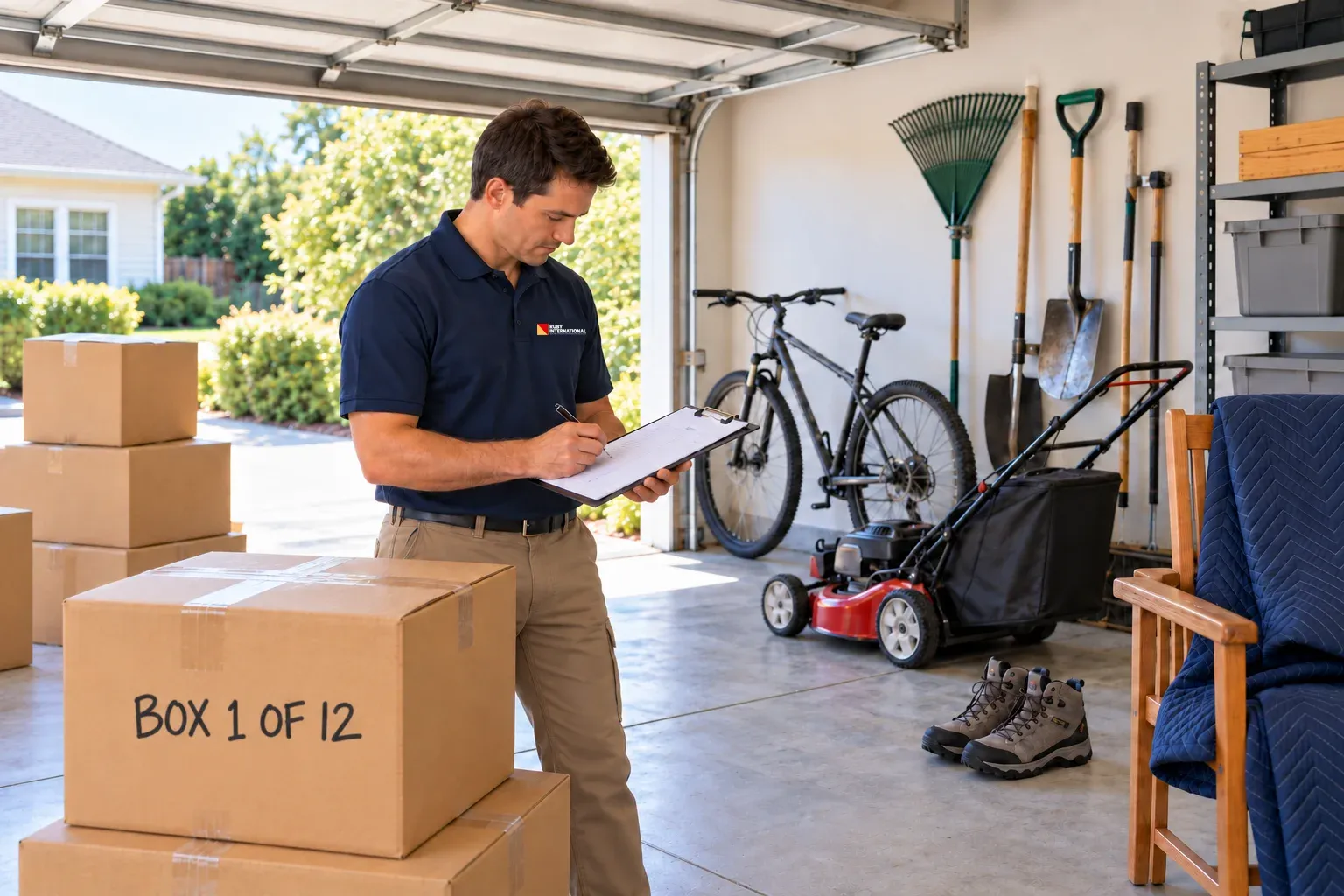
The agriculture department asks that anything that has been in contact with food, soil, plants or animals is emptied, drained, cleaned and dried before it is packed. Then the packing list tells the inspector what is in each box and what it is made of.
Clean it first
-
Garden, garage and around the house. Barbeques and lawnmowers emptied, drained and free of contamination; garden furniture, pots and tools free of soil.
Every item the department names: garden, garage and around the house
- Used equipment and machinery, such as barbeques and lawnmowers: emptied, drained, cleaned and dried.
- Garden furniture, fencing, pots and ornaments, outdoor toys, tools and implements: all soil, animal and plant debris removed, every surface cleaned.
- Animal bedding and cages, bins, brooms and vacuum cleaner bags: emptied and cleaned.
- Farm goods: cleaned of soil and plant and animal material.
- Carpets: vacuumed.
-
Kitchen. Kitchenware cleaned; no fresh food packed, and no opened dry food, herbs or spices.
Every item the department names: kitchen
- Kitchenware: cleaned and dried.
- No fresh food.
- No opened packages of dry foods, herbs and spices: the department says they may be harbouring insect pests that are difficult to see.
-
Outdoor and sports gear. Bikes, footwear, camping gear and water-sports equipment cleaned and dried.
Every item the department names: outdoor and sports gear
- Bikes, tyres included.
- Footwear.
- Camping gear.
- Water-sports equipment.
-
Timber and plant-material items. Timber checked for insects; Christmas decorations and other decorations with plant material may be treated or destroyed.
Every item the department names: timber and plant-material items
- Timber items: check their surfaces for signs of insects, such as sawdust-like powder, fresh holes, chewed timber or tunnels.
- Decorations containing plant material may be treated or destroyed at your expense. The department says Christmas decorations containing plant material are one of the most common items volunteered for destruction.
- Wicker, cane, rattan and bamboo: check them in BICON.
-
What the ABF looks at. Its examples are wooden furniture, an animal-skin drum, dried flowers, and things that have been in contact with animals, plants, water, food or soil: bike tyres, golf clubs, pet blankets.
The packing list the inspector reads
- Number every box to match the list, in the form “Box 1 of 12”, and take off any old labels.
- List each box’s contents and what each item is made of. The department’s examples: a metal bed frame, wooden chairs, plastic picture frames, a cane basket.
- Use clean packing. No used fruit, vegetable, meat or egg cartons, no fertiliser bags, and no straw, sawdust or wood shavings as filler.
- Pack the risk items together, such as footwear, food items and garden tools, and show them on the list. The department’s reason: “biosecurity inspection charges are based on time.”
Download a packing list template (CSV) The same columns: box number, contents, what each item is made of, and a column to flag items of biosecurity interest. It opens in Excel, Numbers or Google Sheets.
The declaration
The B534 statement and who lodges it
The Unaccompanied Personal Effects Statement, form B534e (JUL15), is a legally binding declaration to both the ABF and the Department of Agriculture, Fisheries and Forestry. It is completed in English, in block letters, with every error and alteration initialled. You can lodge it in one of three ways.
-
In person
You, at an ABF counter
You go through an evidence-of-identity check of 100 points of identification, or a friend or relative lodges it, giving a copy of the passport photo page.
-
By email
You or a customs broker
To the ABF’s office for the state or territory: the ABF’s page lists the eight addresses.
-
Through a broker
A customs broker or other service provider
They report your effects to the ABF electronically, through the Integrated Cargo System.
What every route needs
- The signed B534.
- The bill of lading or air waybill, or a delivery order.
- A list of all the goods.
- Receipts or evidence of value for goods owned and used for less than the required period.
- Permits for any prohibited goods.
Without a broker
For the biosecurity clearance, the agriculture department takes the same papers through its Cargo Online Lodgement System: the packing list, the B534, the bill of lading or air waybill and the delivery order, a statutory declaration if someone else clears the goods for you, and any certificates for treatment done before shipping.
Who does what
A customs broker processes the goods through the ABF and the department; a freight forwarder transports them; a depot stores them. Some specialist movers offer the whole movement and clearance as one service.
The B534, section by section: what each asks, and what your answer leads to
A nominee (a freight forwarder, a customs broker, a friend or a relative) may clear the goods on your behalf. The form adds: “Unaccompanied effects may be examined. Please ensure that keys are available at the time of clearance.” Open form B534e on abf.gov.au (PDF)
- Section 1
Why you are coming: as a tourist, for temporary residence, resuming permanent residence or returning as a citizen, taking up permanent residence for the first time, or as a citizen returning temporarily.
- Section 2
Who packed the goods, and whose goods they are.
- Section 3
Restricted goods: drugs, weapons, wildlife articles and objectionable material.
- Section 4
Currency of A$10,000 or more, and medicines.
- Section 5
Tobacco, alcohol, vehicles, trailers and watercraft, commercial goods, and other goods you have owned for less than 12 months, with their price and date of purchase.
The form’s notice: “Any goods owned by you for less than 12 months must be declared.” They are assessed for duty and taxes.
- Section 6
Whether, within one month before shipping, you or a member of your family arriving with you visited a place where farm animals are kept, or a meat plant.
An answer the agriculture department reads when it assesses the statement for biosecurity.
- Section 7
Animal products, food, animal equipment and biological specimens.
Read by the agriculture department in its biosecurity assessment.
- Section 8
Plant material; wooden, cane or bamboo furniture; soil; straw or wood used as packing.
Read by the agriculture department in its biosecurity assessment, with your packing list.
Beyond the freight
Charges at the Australian end
Who sets each charge, and who is billed for it. Neither the ABF’s page nor the department’s states an amount for any of them, so this guide gives none.
| Charge | Set by | Billed to |
|---|---|---|
| Document assessment, inspection and the entry | The agriculture department, under its charging guidelines. The fee depends on the time the assessment and inspection take. | The party nominated in the cargo system. Clients without an account with the department pay upfront. |
| Treatment, export or destruction | Not stated on the department’s page. A department-approved provider does the work, on top of the department’s charges. | You, the owner. |
| Facilitation and storage at the approved site | The approved arrangement site where your mover delivers the goods: port charges, transport, administration, unpacking, storage. Not the department. | You, on an invoice that may call them “quarantine fees”. The department recommends confirming them with your mover. |
| Duty, GST and other taxes | The ABF’s assessment, on goods outside the concession or owned for less than the period. | You, before those goods are released. |
The concession waives duty, GST and other taxes; shipping and brokerage fees are not part of it.
Your shipment
Moving to Australia with Ruby International
We move households internationally, door to door, from the United States. Among our customers’ public reviews on Google and Trustpilot, two describe a move to Australia with us.
What we ask you for
- The B534 statement, signed.
- Your passport, and a copy of your visa.
- A detailed packing list, and an inventory of any alcohol.
- The bill of lading or air waybill.
Tell us when you fly and what you are shipping, and we will quote the move. We do not give legal, tax or customs advice: whether your goods qualify is decided by the ABF, and what is inspected by the agriculture department.
Sources and review date
Everything this page says about the rules comes from these official pages. Last checked: .
- Unaccompanied Personal EffectsAustralian Border ForceThe concession: who it applies to, the table of goods categories with the residency requirement and the months of ownership and use, what it excludes, when the shipment must be arranged, and the three ways to lodge the B534 statement with the documents each needs. Last updated 4 September 2026.Read on .
- Unaccompanied Personal Effects Statement, form B534e (JUL15)Australian Border ForceThe statement itself: its eight sections, the notice that goods owned for less than 12 months must be declared, the nominee who may clear the goods, and the keys needed at clearance.Read on .
- Moving to Australia or importing personal effects/household goodsDepartment of Agriculture, Fisheries and ForestryThe biosecurity side: what cannot come as personal effects, how to clean, pack and list the goods, the assessment, inspection and treatment, and who sets which charges. Last updated 23 June 2026.Read on .
Rules and fees change. Before acting, confirm with the official source. This page explains the procedures; it is not legal or customs advice. Customs decides how your goods are treated.
Planning a move to Australia?
Tell us where you are moving from, where in Australia you are going, and when you plan to fly. We will reply with a quote for your shipment.